
Introduction
In this issue of Blogging Mastery, we dive into the world of Smitten Kitchen – a blog site that attracts over 1 million monthly visits. With its impressive success, it serves as an excellent platform for business bloggers to;
‘Learn from the master.’
Branding and User Experience
Established 16 years ago by the owner and author Deb Perelman, Smitten Kitchen immediately captivates visitors with its clean and elegant design. The branding exudes a sense of simplicity and sophistication, complemented by a monochromatic logo that enhances the positioning. The absence of advertising makes it a visually pleasing and somewhat surprising experience. I’ve become far more accustomed to the visually jarring experience that plagues most food sites these days: an overwhelming number of ads, intrusive newsletter popups, and autoplay video reels.
The thoughtfully organized main menu complements the approach’s simplicity, with the site’s main sections being easily accessible. The standout feature is the recipes section, which incorporates a unique and user-friendly categories filter.
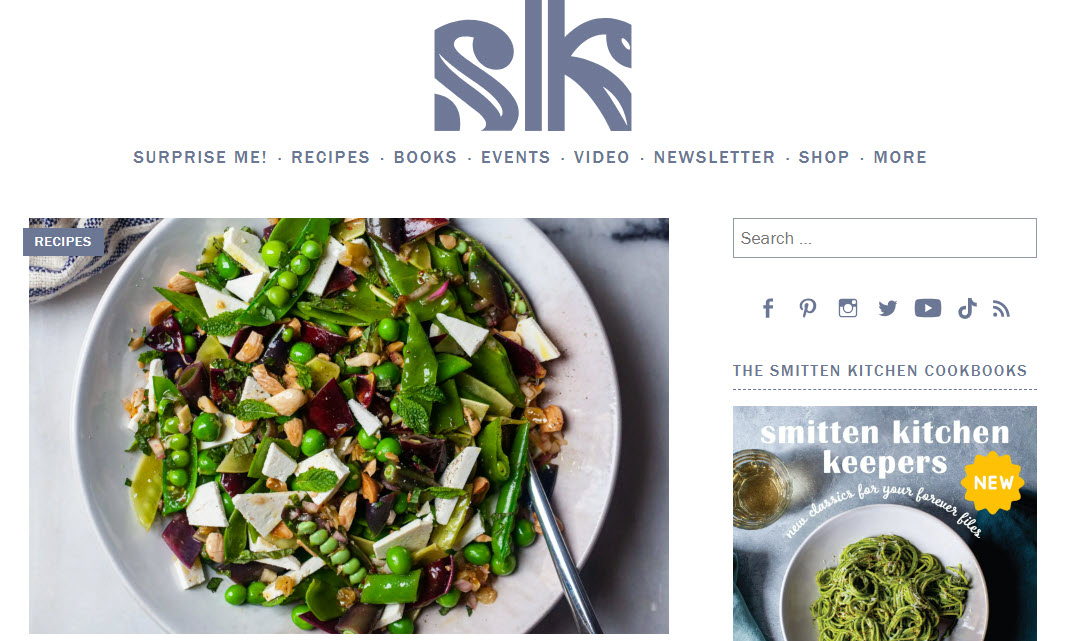
The WordPress Tag Cloud is used to help find and filter recipes and is a fun and simple way to help users find the recipes that excite them. If you have used tags diligently on all your posts, then this method of archiving your posts is one I think works really well. If you have many posts, be sure to also add filtering by category and a search option.
Content
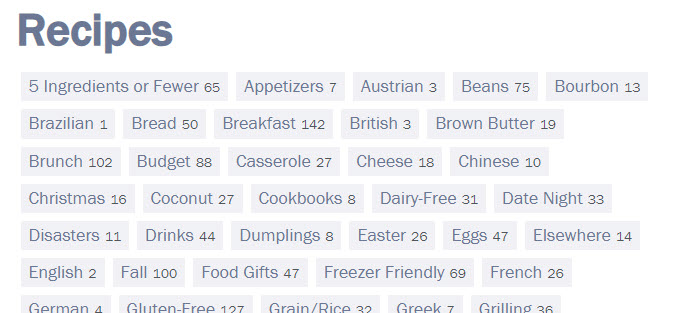
There is an appropriate amount of content with a balanced offering of well-curated recipes across a spectrum that stretches from the whimsical to the traditional but is always intriguing and engaging. The recipe content is not targeting the casual cook but is more aimed at the adventurous eater.
Newsletter
While Smitten Kitchen offers a newsletter, it adopts a non-intrusive approach, avoiding those annoying screen pop-ups. The newsletter is easily accessible, and its quiet approach to promoting it no doubt attracts only genuine subscribers with a sincere interest in the content – a desirable outcome for any blogger. This confident approach is a feature of the entire site.
Monetization
Books
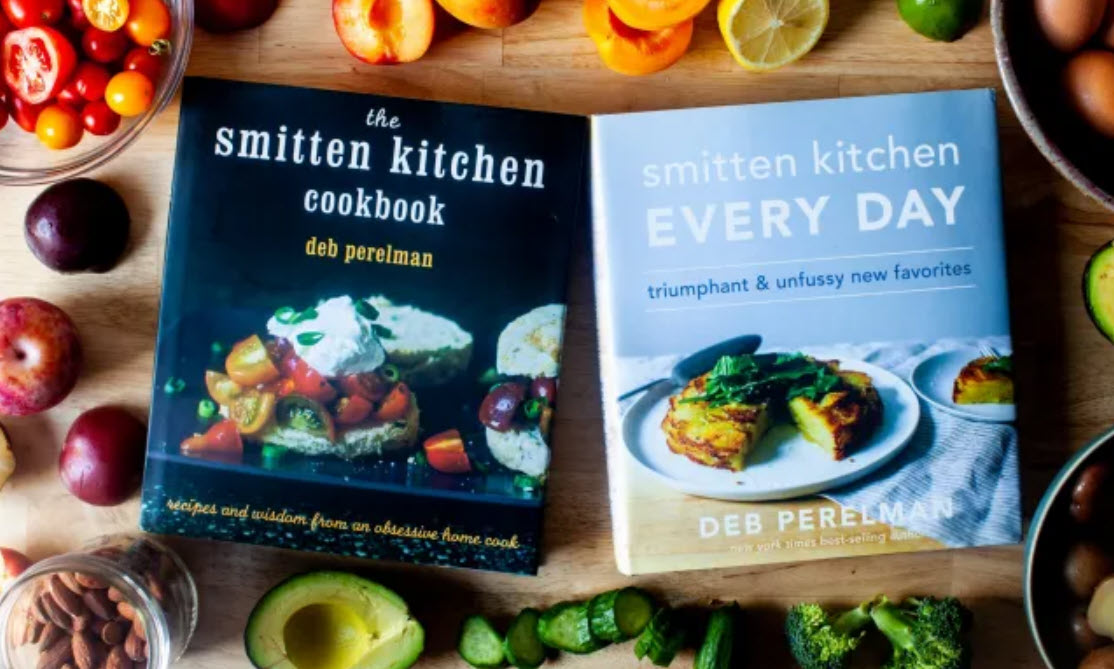
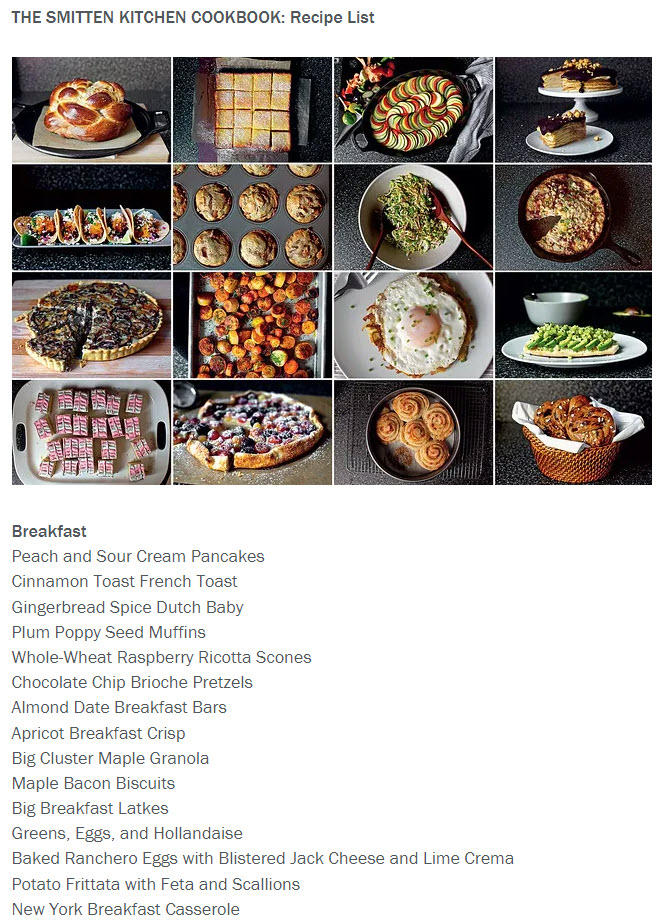
The primary focus is selling Deb Perelman’s books, so the website is a powerful content marketing tool to promote her high-quality printed hardcover books. Detailed information, including comprehensive recipe lists, is available on the site, enabling visitors to make informed purchasing decisions.
Affiliates
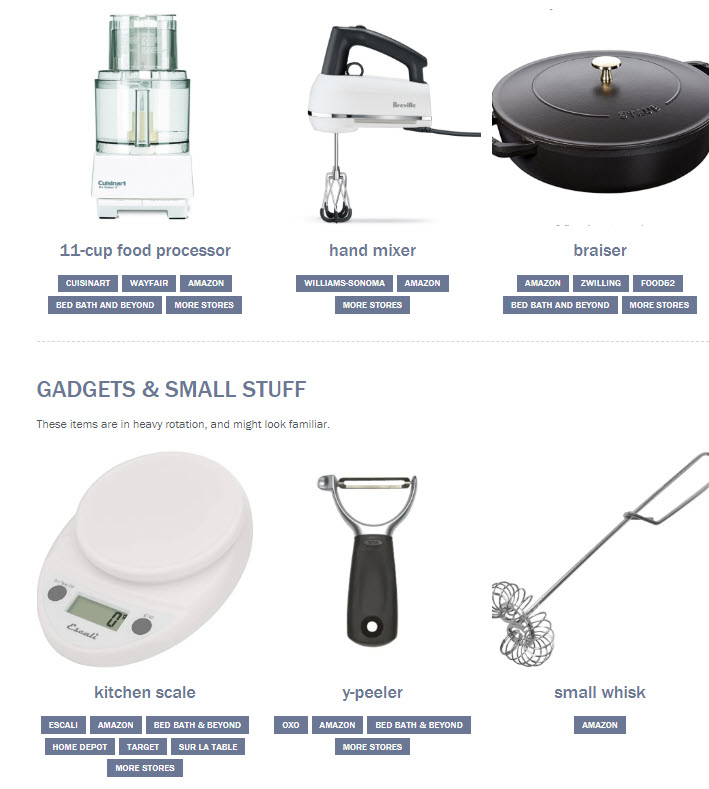
Additionally, Smitten Kitchen features a well-curated shop offering various cooking utensils and devices. These products come from reputable providers, and the shop interface ensures effortless navigation for visitors. Product selection enhances the overall quality associated with the author’s writing and books, which helps build trust and authority.
YouTube Channel
The accompanying YouTube channel provides a further promotional channel for the core offering and adds another revenue stream, contributing advertising income.
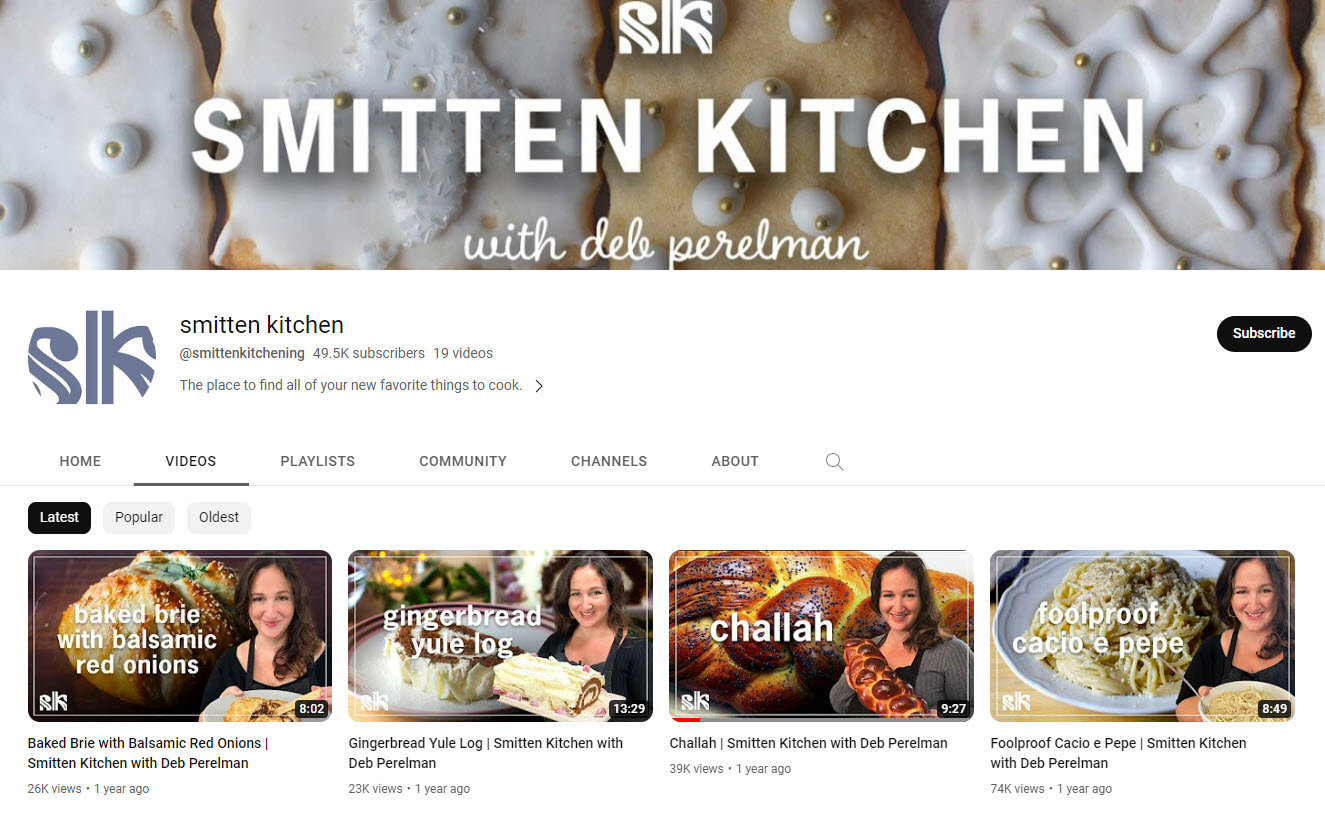
The channel is professionally designed and is a lesson to any blogger working on a YouTube channel. The branding is consistent with the website and embellished by the video thumbnails that feature a photo of the author. This method of personality marketing is standard in YouTube food channels. It helps to build empathy and warmth with the author, synonymous with the pastime of cooking. People cook for others; it’s a communal thing that brings people together, hence the reason for building this type of rapport with your audience.
In Summary – What is there to learn here?
Smitten Kitchen showcases a prime example of confident marketing, presenting high-quality products and employing effective promotional strategies. While most business bloggers’ revenue streams are more heavily focused on advertising and affiliate marketing, there is much to learn from this website.
Its high production quality and readability are enhanced by the minimalist advertising approach, making it an enjoyable visit. The business blogger needs to strike a balance between advertising saturation and the user experience. It’s hard to gauge how much advertising you can get safely onto one page, but it’s not hard to know when you have gone too far.
Try to engage with your followers and ask for their opinions. Experiment with different amounts of advertising on different pages. Learn from other successful blogs, especially ones in your niche. Follow them and see how much they are using.
Smitten Kitchens’s affiliate product pages are another site feature I like. They contain a highly curated selection of quality products that reflect the overall positioning of the product. Do not engage with every product in your niche. Build trust and authority by being selective and choosing the products that match your brand positioning.
This is a slick blog site well designed for its purpose. There is much to learn here, and I hope this small introduction has given you some pointers in your own blogging journey.
Please feel free to join the conversation by leaving your comments and opinions about this blog and its content in the comments section below.
Related Articles

Managing Ad Overload: Lessons from the Lifewire Website
In this edition of Blogging Mastery, we examine the balance between advertising and user experience, focusing on Lifewires approach. We discuss how excessive ads impact branding and engagement, especially on PCs, and contrast this with their mobile-friendly design. Essential insights for website owners on blending monetization with user satisfaction.
0 Comments